
Éva Schmidt
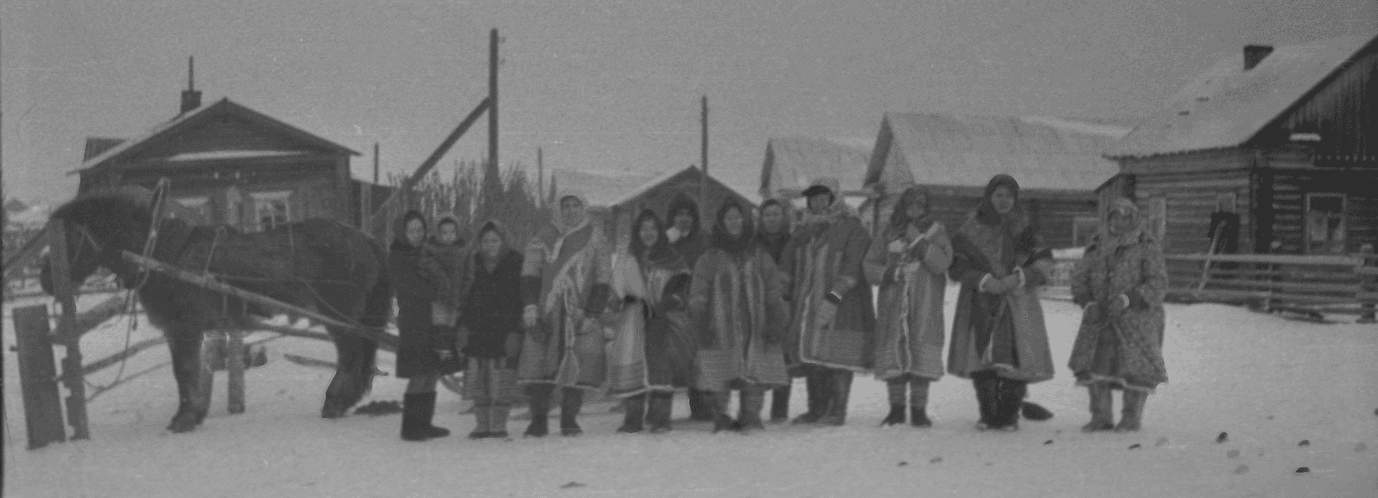
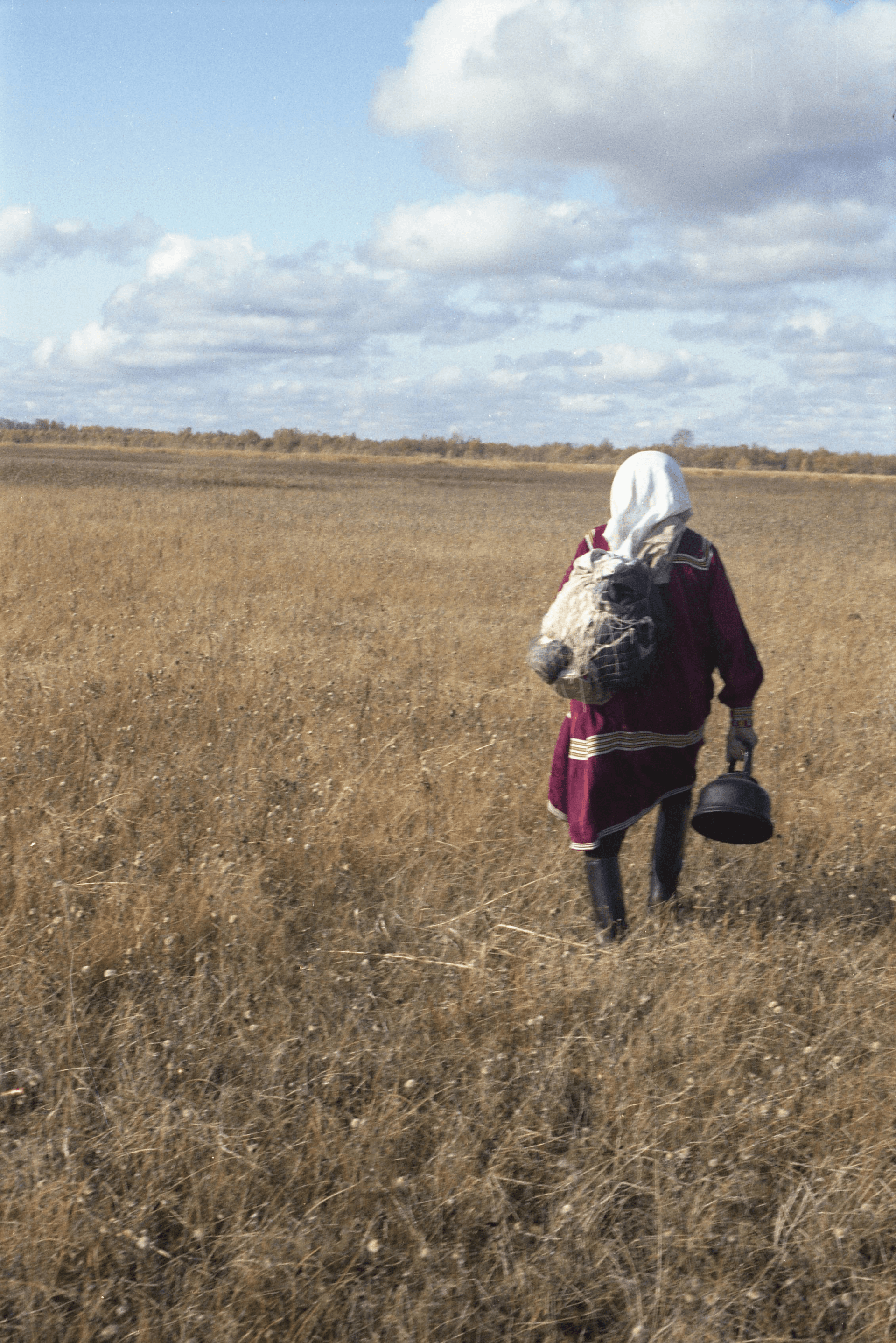
Éva Schmidt, ethnographer, folklorist, linguist, an outstanding figure of Hungarian scientific life, was collecting materials and doing research in Western Siberia between 1970 and 2002, documenting the language and non-material culture of the Khanty and Mansi peoples. Her archive outlines the cross-section of a fishing, hunting and reindeer keeping culture in transition at the turn of the millennium through audio and video recordings, photographs, manuscripts, inflection tables, graphics, sketch maps, short notes and admirably detailed, colorful tables in the neatest handwriting...
Éva Schmidt’s work also has vast international significance, as it provides a large amount of very precious researchable material for a number of scientific fields, including ethnography, folkloristics, cultural anthropology, religious studies, linguistics, history, settlement and family history, etc.
The website of the Éva Schmidt Archive commences the processing and publication of this enormous material.
discover the archive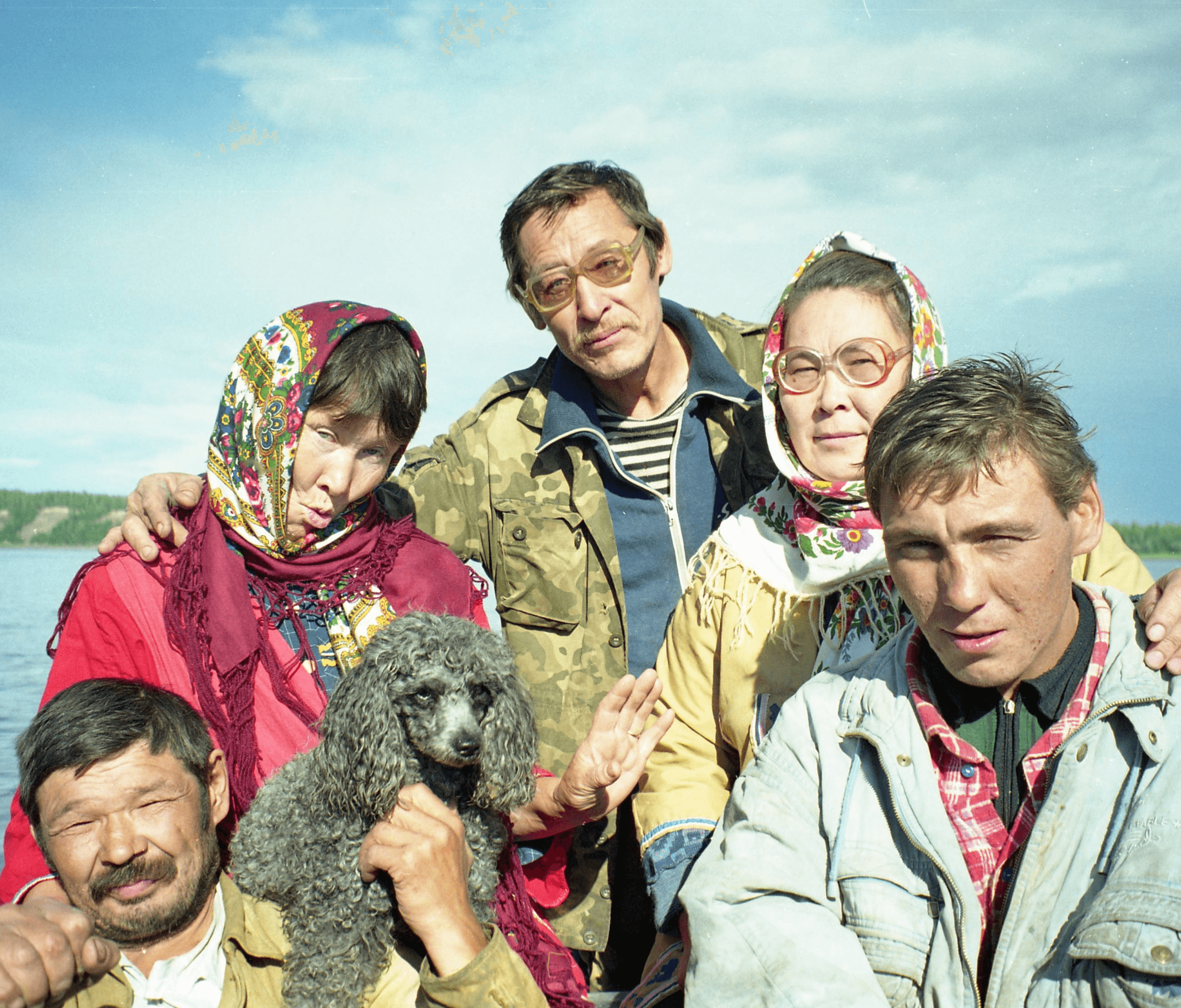
Significance of the legacy
The immeasurable value of her legacy lies in a number of factors in addition to its size. On the one hand, it documents the endangered Khanty and Mansi languages, as well as the cultures of the communities speaking these languages. On the other hand, she conducted her work in line with up to date and ethical field research principles, and her archiving considerations were defined by a profound knowledge of Ob-Ugric culture.
As Éva Schmidt was an equally outstanding expert of linguistics, ethnography, religious studies and folkloristics, her complex outlook provided a basis for recognising values to be documented. She was simultaneously aware of Western scientific results and the sources from Russia (the Soviet Union), as well as older and contemporary studies. An equally significant factor is that being familiar with traditional Ob-Ugric culture and also an excellent speaker of Khanty and Mansi dialects, she had access to content and information that was inaccessible or impossible to interpret for outsiders using a mediating language. In this way, her spectrum of collection could include almost everything from sacral and private folklore through the description of work processes to life histories, reminiscences and folklore festivals.
Processing the legacy
Processing the legacy involves different kinds of tasks relating to its content and form.
In a minority of cases, Éva Schmidt has completed the preparatory work for publication, and digitization is all that is left to do. In the larger part of the collections, however, transcription and translation tasks need to be done, and it will also be a challenge to add notes to the texts at the level that the researcher has set with her own practice.
The scientific analysis of the collected materials in the form of articles and studies is yet another sense of the concept of processing, and a task for the future.
Processing the Schmidt legacy also comprises diverse tasks in the technical sense, every format requires some sort of digitization or conversion work. Content processing will most probably meet language technological and technical-formal processing in operations like creating database storage, data visualization, e.g. in maps, making data and information in the collections accessible – that is, making use of the possibilities provided by computer processing. Obviously, this was not part of Éva Schmidt’s aims, but as language technology offers this opportunity, we also consider this to be a part of processing.
Principles of publication
In describing the ideally operating archive, Éva Schmidt articulated her principles of collecting, archiving and data handling, so posterity is lucky to be able to do the processing in their spirit.
The local culture’s information handling rules cannot be disregarded in the case of several private and sacral genres. Knowledge of traditional and modern Ob-Ugric culture (values, rules, norms) should be at the foundation of publication. With regard to these, we always observe Éva Schmidt’s general guidelines, as well as those relating to the given material.
Éva Schmidt preserved the unique characteristics of Khanty and Mansi texts when transcribing them. We also follow this principle in their publication. However, in the Hungarian translations, most of which were created in the typewriter era, there will be minor, insignificant alterations, unifications based on well defined transcription norms and the current spelling rules – given that these aspects of the original script carry no linguistic or cultural information whatsoever.
As a result of Éva Schmidt’s complex approach, a host of explanations related to the subject and language help clarify linguistic and cultural connections in the texts prepared by her for publication or education. In addition to these, there is a massive amount of metadata, information that the texts contain, e.g. names of persons, settlements, etc., which can be important for several reasons. During processing, we put special emphasis on the accessibility, searchability of such data, and we aim to secure adequate language technological background to this.
It is our goal to make the materials to be published accessible to the scientific world based on the English language as well as research in Russia. Therefore the website itself will also be available in several languages, and we are preparing the English and Russian translations of Khanty texts if possible, in addition to the Hungarian ones.
Beyond the scientific research – in accordance with Éva Schmidt’s principles – the data, texts and knowledge made available to the Khanty can serve as a source for them to gain a better knowledge of multiple segments of their culture and recent past (settlement and family histories, etc.).
Projects
Preparation of the processing of the Schmidt legacy
ELKH Key research area program, SA-102/2021
Hungarian Research Centre for Linguistics, 2021–2024
The project run at the Hungarian Research Centre for Linguistics is a preparation for the actual processing of the Belojarskij legacy, and its aims are to publish the personal songs (former term: fate songs) collected in 1980 and 1982 online, to prepare an inventory of the legacy, to edit a volume presenting the Kazym Khanty dialect based on the voice recordings and notes of Éva Schmidt’s course, and to make available her collection of scientific papers on various Ob-Ugric topics.
Project leader: Mária Sipos
Organizing, processing and publishing the researcher Éva Schmidt’s legacy
NKFIH 2020-2.1.1-ED-2021-00189
Institute of Ethnology, Research Centre for the Humanities – Hungarian Research Centre for Linguistics, 2022–2025
Processing the different genres of the Belojarskij collections will commence with a project implemented jointly by the Research Centre for the Humanities and the Hungarian Research Centre for Linguistics. The work includes the transcription of texts, digitization of earlier transcriptions, musical notation of sung genres, and their translation from Khanty to Hungarian, Russian and English. The processing of the collected materials will also begin based on several disciplines (linguistics, folkloristics, ethnology, religious studies) in the form of scientific papers.
A significant role will be given to data visualization (locations of collecting, informants, etc.) in presenting Éva Schmidt’s fieldwork. Digitized versions of her hand-drawn maps and illustrations will also be made available. Parallel corpora of the textual material will be created to enable subsequent neural network processing. Results will be reported at scientific events. In addition to the website, some collected texts and the results of the processing will be published in books, along with a publication for the wider public. Fieldwork in Siberia, collection, and consultations will support cross-checking.
Project leader: Mihály Hoppál
Project manager: Zsolt Szilágyi
Research site and funding
The linguistic processing, cataloging and archiving of the substantial amount of collected material is carried out by staff of the Hungarian Research Centre for Linguistics on the one hand, and the Institute of Ethnology of the Research Centre for the Humanities on the other hand. The past and present staff members of the Institute for Musicology contributed to the musical notation and processing of the sound recordings, and to making available the audio materials.